Healthy trees are among the most valuable assets in a residential landscape. They provide shade, improve air quality, enhance property value, and contribute to the overall character of a neighborhood. Yet many homeowners are unsure how to tell whether their trees are thriving or quietly struggling. Understanding what healthy tree growth looks like can help property owners recognize early warning signs, make informed maintenance decisions, and preserve the long-term vitality of their landscape.
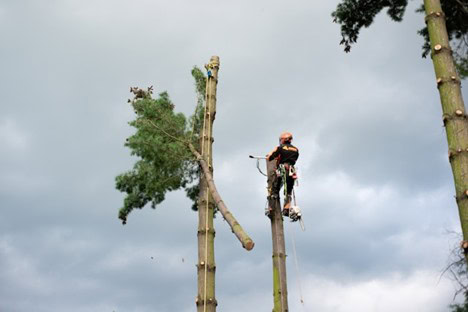
Quality tree trimming in Kansas City, MO is reflected in a range of structural, biological, and environmental indicators that extend far beyond branch length alone. From canopy balance to root stability, healthy growth follows predictable patterns that can be observed throughout the seasons.
Balanced Canopy Structure
One of the clearest signs of a healthy tree is a well-balanced canopy. In residential landscapes, trees should display a crown that is proportionate to the trunk and evenly distributed around the central leader or main structure. A balanced canopy allows sunlight to penetrate evenly, reduces stress on major limbs, and helps the tree withstand wind and weather events.
Healthy canopies are neither excessively dense nor sparse. When branches are overcrowded, airflow becomes restricted, increasing the risk of fungal disease and pest infestations. Conversely, a canopy with large gaps or uneven growth may indicate stress, prior damage, or poor structural development. Ideally, the canopy should appear full yet open, with branches that are well-spaced and naturally arranged.
Strong Central Structure and Branch Attachment
Tree strength begins with structure. Healthy trees typically have a clearly defined trunk or central leader that supports lateral branches with strong attachment points. Branches should emerge from the trunk at appropriate angles, forming secure connections that distribute weight evenly as the tree grows.
Weak branch attachments, such as those forming narrow V-shaped unions, are more prone to splitting as the tree matures. Healthy growth favors wider branch angles, which allow wood fibers to interlock and create durable joints. Over time, trees with strong structural form are better equipped to handle snow loads, wind stress, and seasonal changes without suffering breakage. Maintaining structural integrity is particularly important, as failing limbs can pose safety risks to homes, vehicles, and people.
Consistent Annual Growth Patterns
Healthy trees demonstrate steady, predictable growth from year to year. While growth rates vary by species, climate, and soil conditions, most healthy trees produce consistent annual increases in branch length, trunk diameter, and canopy expansion.
Abrupt changes in growth rate, either rapid spurts or noticeable slowdowns, can signal underlying issues. Excessively fast growth may result from environmental stress or nutrient imbalance, leading to weaker wood. Conversely, stunted growth can indicate compacted soil, root damage, drought stress, or disease.
Observing growth patterns over multiple seasons provides valuable insight into a tree’s overall health and whether its environment is supporting long-term development.
Healthy Leaf Color and Density
Leaves are one of the most visible indicators of tree health. In a thriving tree, foliage should display consistent color, appropriate size, and seasonal timing. Leaf color varies by species, but healthy leaves are generally vibrant and uniform rather than pale, spotted, or mottled.
Premature leaf drop, discoloration, or unusually small leaves may point to nutrient deficiencies, pest activity, or root-related stress. Sparse foliage can also suggest that the tree is redirecting energy away from canopy development due to environmental pressures.
In healthy residential landscapes, leaf density should be sufficient to provide shade without appearing overcrowded. Leaves should emerge in spring, remain intact through the growing season, and transition naturally in fall according to the species.
Sound Bark and Trunk Condition
The trunk serves as the main conduit for water, nutrients, and structural support. Healthy tree trunks have intact bark without extensive cracking, peeling, or wounds. Minor surface irregularities are normal, but large areas of missing bark or deep fissures may compromise the tree’s ability to transport essential resources.
Bark damage caused by lawn equipment, construction activity, or environmental stress can open pathways for pests and disease. A healthy tree responds to minor injuries by forming protective tissue around the affected area, gradually sealing the wound.
In residential environments, protecting trunk integrity is essential for maintaining both tree health and structural safety.
Root Stability and Soil Interaction
Although roots are largely hidden from view, they play a central role in healthy growth. A stable, well-established root system anchors the tree and supplies water and nutrients needed for canopy development. Healthy trees typically show no signs of soil heaving, exposed roots, or leaning that worsens over time.
Compacted soil, poor drainage, and restricted root zones can severely limit growth, even when the canopy appears normal initially. Trees growing near driveways, sidewalks, or foundations may experience root stress if space is insufficient for natural expansion.
Healthy trees benefit from loose, well-aerated soil that allows roots to spread evenly and absorb moisture efficiently.
Natural Growth Habit and Species Characteristics
Each tree species has a natural growth habit shaped by genetics and environmental adaptation. Healthy growth respects this natural form rather than forcing trees into unnatural shapes. For example, some species develop broad, spreading crowns, while others grow upright and narrow.
When trees are allowed to follow their natural structure, they are better able to distribute weight, resist stress, and allocate energy efficiently. Attempts to drastically alter a tree’s natural habit can weaken its structure and reduce overall health.
Understanding species-specific growth patterns helps homeowners recognize what “healthy” truly looks like for the trees in their landscape.
Absence of Chronic Pests and Disease
Occasional pest activity is normal in any landscape, but healthy trees are generally resilient enough to withstand minor infestations without lasting damage. Chronic pest problems, recurring fungal infections, or repeated dieback often indicate underlying stress that weakens natural defenses.
Healthy trees benefit from proper spacing, airflow, and soil conditions that reduce the likelihood of disease spread. When a tree consistently shows signs of infestation, it may be struggling to maintain balance between growth and defense.
Early detection and professional evaluation can prevent minor issues from escalating into serious health threats.
Seasonal Adaptability and Recovery
Healthy trees respond appropriately to seasonal changes. They enter dormancy in winter, resume growth in spring, and adjust physiological processes based on temperature and moisture availability. After storms or minor damage, healthy trees typically recover by producing new growth and reinforcing weakened areas.
Trees that fail to rebound after environmental stress may be experiencing cumulative damage or declining vitality. Observing how a tree responds to seasonal challenges provides valuable clues about its long-term resilience.
Long-Term Value of Healthy Growth in Residential Landscapes
Healthy tree growth contributes directly to the beauty, safety, and value of residential properties. Well-maintained trees enhance curb appeal, provide shade that reduces energy costs, and create inviting outdoor spaces. Over time, healthy trees also require fewer corrective interventions and are less likely to pose safety risks.
By understanding what healthy growth looks like, homeowners can make informed decisions about care, recognize when professional guidance is needed, and foster landscapes that remain vibrant for decades.
Supporting Growth Through Informed Care
Promoting healthy tree growth is a long-term commitment that involves observing natural patterns, protecting soil and root systems, and addressing issues early. While trees are remarkably resilient, they depend on supportive environments and thoughtful management to thrive in residential settings.
Recognizing the signs of healthy growth empowers homeowners to act proactively rather than reactively, preserving the ecological and aesthetic benefits trees bring to residential landscapes year after year.